New Possession Grounds Under the Renters' Rights Act 2025: Which Ground Do You Use?
Published: 22 March 2026
Last updated: 22 March 2026
Author: Hauzo
Jurisdiction: England only (Scotland, Wales, and Northern Ireland have separate tenancy legislation)
From 1 May 2026, every eviction in England requires a specific legal ground. No more Section 21 notices. No more "no reason needed." The revised Schedule 2 of the Housing Act 1988 now contains 37 distinct grounds — more than double the original number — and each one has its own notice period, evidence requirements, and court treatment.
This guide covers the new possession grounds you're most likely to use as a private landlord, the difference between mandatory and discretionary, and how to serve a Section 8 notice correctly. For the full picture of what's changing, see our Renters' Rights Act 2025 compliance guide.
Source: Renters' Rights Act 2025; Housing Act 1988, Schedule 2
What Are the New Possession Grounds Under the Renters' Rights Act?
The new possession grounds are the legal reasons a landlord can use to end a tenancy and recover their property. They're set out in the revised Schedule 2 of the Housing Act 1988, as amended by the Renters' Rights Act 2025, and they replace Section 21 as the only route to eviction from 1 May 2026.
The revised Schedule 2 contains 37 grounds. Most private landlords will use four or five regularly: Ground 1A (sale), Ground 1 (landlord occupation), Ground 8 (rent arrears), Ground 6 (redevelopment), and Ground 12 (breach of tenancy). The rest cover specialist situations — student accommodation, agricultural tenancies, ministerial housing, and employer-linked lets. If you're coming from the Section 21 system that's being abolished, the key shift is this: you now need a reason, evidence, and a court that agrees both are genuine.
Source: Housing Act 1988, Schedule 2; GOV.UK Guide to the Renters' Rights Act
What Is the Difference Between Mandatory and Discretionary Grounds?
Mandatory grounds require the court to grant possession if you prove the ground is satisfied. Discretionary grounds give the court the power to refuse possession even if the ground is proven — the judge weighs your case against the tenant's circumstances before deciding.
This distinction matters because it changes your certainty of outcome. On a mandatory ground like Ground 1A (sale), if you can prove you genuinely intend to sell, the court must order possession. On a discretionary ground like Ground 14 (nuisance or antisocial behaviour), the court can refuse if the behaviour was minor, has stopped, or if eviction would cause the tenant disproportionate hardship.
Under the old Section 21 system, possession was near-automatic — courts barely examined the merits. Under the new grounds-based system, courts examine everything. Even on mandatory grounds, judges will scrutinise whether your stated intention is genuine. If you say you're selling but have no estate agent instructed, no marketing activity, and no evidence of genuine intent, the court may reject your claim. Build your evidence before you serve notice, not after.
Source: Housing Act 1988, Schedule 2; Keystone Law
Which Ground Do I Use If I Want to Sell the Property?
Use Ground 1A. This is a new mandatory ground introduced by the Renters' Rights Act 2025, specifically designed for landlords selling with vacant possession. It requires four months' written notice via a Section 8 notice and can't be used during the first twelve months of the tenancy. It's the primary replacement for Section 21 in sale situations.
You'll need to demonstrate genuine intention to sell — evidence like instructing an estate agent, commissioning a valuation, or listing the property.
The court will scrutinise your motive — if Ground 1A looks like a workaround for no-fault eviction rather than a genuine sale, the court can refuse possession. And if you do gain possession under Ground 1A, you can't market or re-let the property for twelve months afterwards.
The timing is significantly different from Section 21. Under the old system, you gave two months' notice and could sell to a buyer who'd wait for the eviction to process. Under Ground 1A, you're looking at four months' notice plus court processing time — realistically six to eight months from decision to vacant possession. If you're planning to sell a tenanted property, factor this timeline into your decision now. The compliance timeline maps every key deadline.
Source: Renters' Rights Act 2025; GOV.UK Guide; Keystone Law
Which Ground Do I Use for Rent Arrears?
Use Ground 8. This is a mandatory ground, but the Renters' Rights Act 2025 has raised the threshold from two months' arrears to three months' — and introduced a Universal Credit exclusion that changes the calculation significantly.
Ground 8 requires four weeks' notice. The tenant must owe at least three months' rent both when you serve the notice and at the court hearing date. If they pay down below three months between service and hearing, the ground fails. Any arrears caused by Universal Credit payment delays are excluded from the calculation — you can't count rent the tenant hasn't received from the DWP.
This means earlier monitoring and faster action. Under the old two-month threshold, you had a shorter window before the ground triggered. Now, a tenant can build up nearly three months of arrears before you can act — and if they're on Universal Credit, the effective threshold is even higher. Keep a detailed rent account, chase arrears at the one-month mark, and document every missed or late payment.
If arrears are borderline, consider Ground 10 as a discretionary alternative — it covers any amount of rent lawfully due and unpaid, without the three-month threshold. Ground 10 requires four weeks' notice and gives the court more flexibility, but it also means the court can refuse possession if the tenant clears the debt before the hearing.
For how this connects to the new rules on rent increases, including how Section 13 notice errors interact with arrears claims, see our rent increases guide.
Source: Renters' Rights Act 2025; Housing Act 1988, Schedule 2; Trowers & Hamlins
Which Ground Do I Use If I Want to Move In?
Use Ground 1. This is a mandatory ground for landlord occupation — you intend to live in the property as your only or principal residence. It requires four months' notice, can't be used in the first twelve months of the tenancy, and the court will test whether your intention to occupy is genuine before granting possession.
You'll need to demonstrate genuine intention to occupy the property yourself — not as a secondary home, holiday let, or investment hold. Evidence includes relocation plans, proximity to a new workplace, or sale of your current residence. Courts will test whether your intention is real, and if you re-let the property within twelve months of gaining possession, the tenant may have a claim for misrepresentation.
There's one additional restriction: if you purchased the property while it was already tenanted, you may not be able to use Ground 1 unless the previous owner was an owner-occupier who could have used the ground themselves. This prevents investors from buying tenanted properties and immediately evicting to move in. Check with a solicitor before relying on Ground 1 if you acquired the property with a sitting tenant.
Source: Renters' Rights Act 2025; GOV.UK Guide; Keystone Law
What About Antisocial Behaviour and Breach of Tenancy?
For breach of tenancy terms, use Ground 12 (discretionary, two weeks' notice). For nuisance, annoyance, or criminal behaviour, use Ground 14 (discretionary, with proceedings possible immediately in serious cases). These are the two conduct grounds most relevant to private landlords — and both are discretionary, meaning the court weighs your case against the tenant's circumstances.
Ground 12 — Breach of tenancy obligation (other than rent).
The tenant has broken a non-rent term of the tenancy agreement. This covers unauthorised subletting, keeping pets in breach of the tenancy, using the property for business purposes, or refusing access for inspections.
Ground 12 requires two weeks' notice and is discretionary — if the breach is capable of remedy and the tenant fixes it after receiving notice, the court may refuse possession. Document the breach thoroughly: photographs, written complaints, tenancy clause citations, and any prior warnings you've given.
Ground 14 — Nuisance or antisocial behaviour.
The tenant (or someone living with or visiting them) is causing nuisance or annoyance to neighbours, to the landlord, or to persons engaged in lawful activity in the locality. It also covers convictions for using the property for immoral or illegal purposes.
Ground 14 is discretionary, but unlike most grounds it has no minimum notice period — you can begin court proceedings immediately. In serious cases (drug dealing, persistent harassment, criminal convictions), the court can fast-track the process. The only restriction is that the possession order itself cannot take effect within fourteen days of being made. Gather neighbour statements, police reports, and local authority antisocial behaviour records before you proceed.
If the tenant has damaged furnished items provided under the tenancy, use Ground 15 (deterioration of furniture) — also discretionary, two weeks' notice. Ground 15 covers furniture specifically; Ground 13 covers deterioration of the dwelling-house itself. For rent-related disputes that don't meet the three-month Ground 8 threshold, Ground 10 covers any amount of arrears as a discretionary ground.
The First-tier Tribunal handles related disputes including rent increase challenges and rent repayment orders, so check whether your issue sits with the County Court or the Tribunal before you proceed. If the dispute involves property condition rather than tenant conduct, see our guide to housing standards under the Decent Homes Standard and Awaab's Law.
Source: Housing Act 1988, Schedule 2; Keystone Law; GOV.UK Guide to the Renters' Rights Act
What Notice Periods Apply to the New Possession Grounds?
Every new possession ground has a prescribed notice period before you can file court proceedings. There are four tiers: four months for property-decision grounds (sale, occupation, redevelopment), two months for employment-linked tenancies (Ground 5C), four weeks for rent arrears, and two weeks for conduct grounds like breach of tenancy. Ground 14 (nuisance) is the exception — you can begin proceedings immediately with no notice period at all.
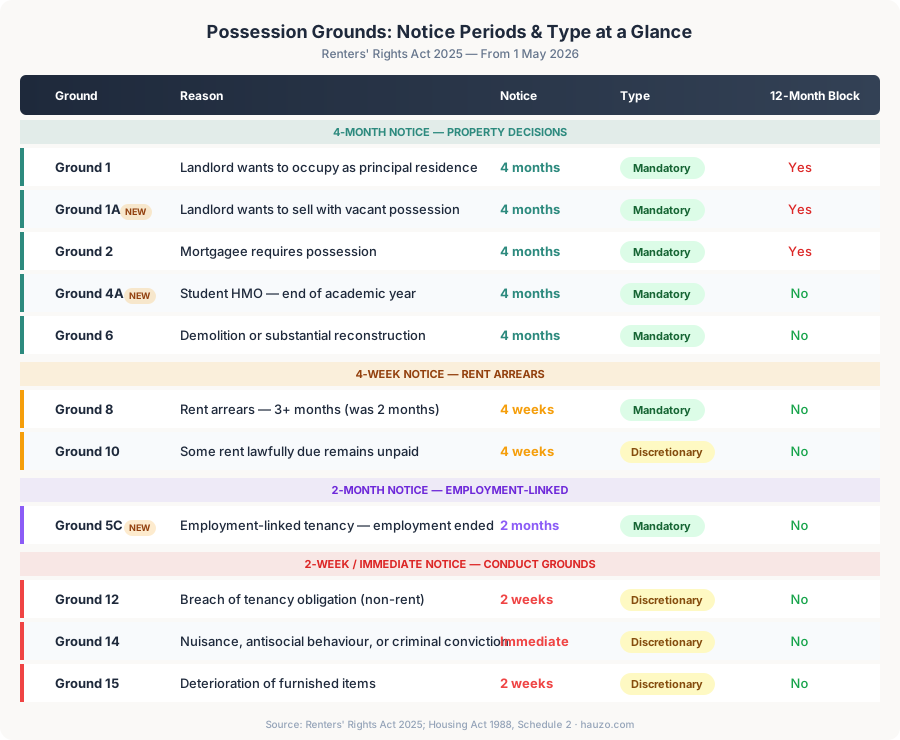
| Ground | Reason | Notice Period | Type | 12-Month Exclusion |
|---|---|---|---|---|
| Ground 1 | Landlord wants to occupy | 4 months | Mandatory | Yes |
| Ground 1A | Landlord wants to sell | 4 months | Mandatory | Yes |
| Ground 2 | Mortgagee requires possession | 4 months | Mandatory | Yes |
| Ground 4A | Student HMO (academic year) | 4 months | Mandatory | No |
| Ground 6 | Redevelopment | 4 months | Mandatory | No |
| Ground 8 | Rent arrears (≥3 months) | 4 weeks | Mandatory | No |
| Ground 10 | Some rent in arrears | 4 weeks | Discretionary | No |
| Ground 12 | Breach of tenancy obligation | 2 weeks | Discretionary | No |
| Ground 14 | Nuisance or antisocial behaviour | Immediate | Discretionary | No |
| Ground 15 | Deterioration of furniture | 2 weeks | Discretionary | No |
| Ground 5C | Employment-linked tenancy ended | 2 months | Mandatory | No |
The twelve-month exclusion applies to Grounds 1, 1A, and 2 — you cannot use these grounds during the first year of the tenancy. This prevents landlords from granting a tenancy and immediately serving notice to evict. Ground 6 (redevelopment) has a six-month minimum tenure requirement instead — you must wait at least six months before serving a Section 8 notice, and you must have acquired your interest in the property before the tenancy began. For the conduct and arrears grounds, there's no minimum tenancy period — you can serve notice as soon as the ground arises.
Source: Renters' Rights Act 2025; GOV.UK Guide
How Do I Serve a Section 8 Notice Correctly?
A Section 8 notice is the formal document that starts the possession process. Get it wrong and the notice is invalid — you lose months and have to start again. Every element must be correct before you serve.
Your Section 8 notice must include: the property address, the specific ground(s) you're relying on, the factual basis for each ground (not just the ground number — you need to explain the circumstances), the notice period expiry date, and information about the tenant's right to respond and seek legal advice.
The notice must use the government-prescribed form, which MHCLG will publish before 1 May 2026.
Serve the notice by personal delivery (hand it to the tenant or their agent), special delivery (recorded post to their last known address), or email (only if the tenant has previously consented to email service). Keep proof of service — a delivery receipt, signed acknowledgement, or email delivery confirmation. If you can't prove service, the court won't accept it.
After the notice period expires (two weeks, four weeks, or four months, depending on the ground), you can file a possession claim at the County Court. The court will schedule a hearing, examine your evidence, and decide whether to grant a possession order. If you're using a discretionary ground, prepare for the court to weigh the tenant's circumstances against yours. Budget for this to take time — county court delays mean three to six months from filing to hearing is common.
You must be registered on the PRS Database before the court will hear your possession claim. Without registration, the court cannot process your application — with one exception: landlords seeking possession on Ground 7A or Ground 14 (the antisocial behaviour grounds) can proceed even without database registration, so urgent ASB cases aren't delayed by administrative requirements.
Source: Renters' Rights Act 2025; Housing Act 1988; Keystone Law
What Happens If the Court Refuses My Possession Claim?
On a mandatory ground, refusal is rare but not impossible. On a discretionary ground, refusal is a realistic outcome that you must prepare for. Understanding when and why courts refuse helps you build a stronger case.
On mandatory grounds (1, 1A, 6, 8), the court must grant possession if you prove the ground is satisfied — but "prove" is the operative word. If you claim Ground 1A (sale) but have no estate agent instructions, no marketing evidence, and no timeline for the sale, the court may find the ground unproven.
If you claim Ground 8 (arrears) but the tenant paid down below three months before the hearing, the ground fails automatically. Courts also have the power to suspend a possession order — meaning the tenant stays, subject to conditions (such as paying off arrears in instalments).
On discretionary grounds (10, 12, 14, 15), the court balances your interests against the tenant's. Factors include the severity of the conduct, whether the tenant has remedied the issue, the tenant's housing need, and the proportionality of eviction as a remedy.
A minor noise complaint won't justify eviction if the tenant has dependants and no alternative housing. The more serious the conduct and the stronger your documentation, the more likely the court is to grant possession.
If your claim is refused, you can reapply — but only if the facts have changed. You can't simply resubmit the same case hoping for a different judge. Alternatively, you may be able to use a different ground or seek a suspended order with conditions. Take legal advice before deciding your next step.
Source: Housing Act 1988, Schedule 2; Trowers & Hamlins
How Should I Prepare for the New Possession Grounds?
The new grounds take effect on 1 May 2026. If you manage tenanted property, start preparing now — you don't want your first experience of the new system to be a contested court hearing with no evidence file.
Now — before 1 May 2026:
- Audit your portfolio for potential eviction scenarios. For each property, note whether you might need to sell (Ground 1A), move in (Ground 1), or deal with an existing arrears or behaviour issue. Knowing which ground applies before you need it saves critical time.
- Start building evidence files. For each tenancy, maintain a current rent account showing every payment and any arrears. Keep copies of all tenancy terms, correspondence, and any complaints from neighbours. If you ever need to serve notice, this file is your court case.
- Familiarise yourself with the Section 8 notice. MHCLG will publish the prescribed form before 1 May 2026. Study the requirements now so you can serve correctly when the time comes.
- Check your tenancy agreements for compatibility with the new periodic tenancy rules. Clauses that reference fixed terms or Section 21 may need updating.
Ongoing from 1 May 2026:
- Monitor arrears from day one. The three-month threshold under Ground 8 means you need to act earlier — chase arrears at one month, issue a formal warning at two months, and prepare a Section 8 notice at three months.
- Use the right ground for the situation. Don't default to Ground 1A because it's the most familiar. If your tenant is breaching tenancy terms, Ground 12 requires only two weeks' notice. If they're causing nuisance, Ground 14 can be pursued immediately in serious cases. Match the ground to the facts — it's faster and more likely to succeed.
- Register on the PRS Database when it launches. The court won't hear your possession claim without PRS Database registration (except for antisocial behaviour claims under Ground 7A or 14). Make this a priority when registration opens.
Not sure which possession ground applies to your situation? The Landlord Compliance Navigator walks you through it step by step.
Source: GOV.UK Guide to the Renters' Rights Act; GOV.UK Implementation Roadmap
Frequently Asked Questions
How many new possession grounds are there?
There are 37 grounds in the revised Schedule 2 of the Housing Act 1988. Most private landlords will regularly use five: Ground 1A (sale), Ground 1 (occupation), Ground 8 (rent arrears), Ground 6 (redevelopment), and Ground 12 (breach of tenancy). The remaining grounds cover specialist situations including student lets (Ground 4A), agricultural tenancies, and ministerial housing. See What Are the New Possession Grounds? above for the full overview.
Which ground do I use to sell my rental property?
Use Ground 1A. This is a mandatory ground requiring four months' written notice. You cannot use it in the first twelve months of the tenancy, and you must provide evidence of genuine intent to sell — such as estate agent instructions or a property valuation. See Which Ground Do I Use If I Want to Sell? above for the full requirements and timeline.
How much notice do I give under the new possession grounds?
Four months for property-decision grounds (sale, occupation, redevelopment, mortgagee), four weeks for rent arrears (Ground 8), or two weeks for conduct grounds like breach (Ground 12) and nuisance (Ground 14). In serious antisocial behaviour cases, Ground 14 allows immediate proceedings with no notice period. The notice period runs from the date of service, and you cannot file court proceedings until it expires. See the notice periods comparison table above for every ground.
What evidence do I need to prove my possession grounds in court?
Each ground has specific evidence requirements. For Ground 1A (sale): estate agent instructions, marketing evidence, valuation reports. For Ground 8 (arrears): tenancy agreement, rent account showing three months' arrears at both service date and hearing date. For Ground 1 (occupation): relocation plans, evidence you'll use it as your principal residence. The court scrutinises evidence on every ground — prepare your file before serving notice, not after. See our compliance timeline for key preparation deadlines.
Can the court refuse my possession grounds claim even on a mandatory ground?
Yes, in limited circumstances. If you fail to prove the ground is satisfied — for example, claiming sale but showing no marketing activity — the court can refuse. The court can also suspend a possession order, meaning the tenant stays subject to conditions (such as repaying arrears). On discretionary grounds, refusal is more common — the court weighs your case against the tenant's hardship. See What Happens If the Court Refuses? above for full details.
What is the difference between Section 8 and Section 21?
Section 21 was a no-fault notice — no reason required, two months' notice, near-automatic possession. Section 8 requires a specific legal ground, evidence to support it, and a court willing to test both. Notice periods range from immediate to four months depending on the ground (vs. a flat two months under Section 21). Section 8 also allows tenants to defend the claim, which was rarely possible under Section 21. For a detailed comparison, see our guide to Section 21 abolition.
Source: Renters' Rights Act 2025; Housing Act 1988, Schedule 2; GOV.UK Guide; Keystone Law
This guide is maintained by Hauzo and updated within 48 hours of any GOV.UK, MHCLG, or Parliamentary change affecting possession grounds and landlord eviction rights. Last verified: 22 March 2026.
For personalised compliance tracking, deadline alerts, and step-by-step action plans, try the Landlord Compliance Navigator.